
Tina Worboys | Feb 2026
My RHS Chelsea Flower Show 2026 garden draws on the love of my new rural surroundings and a fascination with the powerful world of the gut microbiome. Apple cider vinegar, a simple ferment of apples and water, used for centuries for its nutritional and medicinal properties, has recently re-emerged in conversations around gut health and wellbeing and formed the spark of an idea.
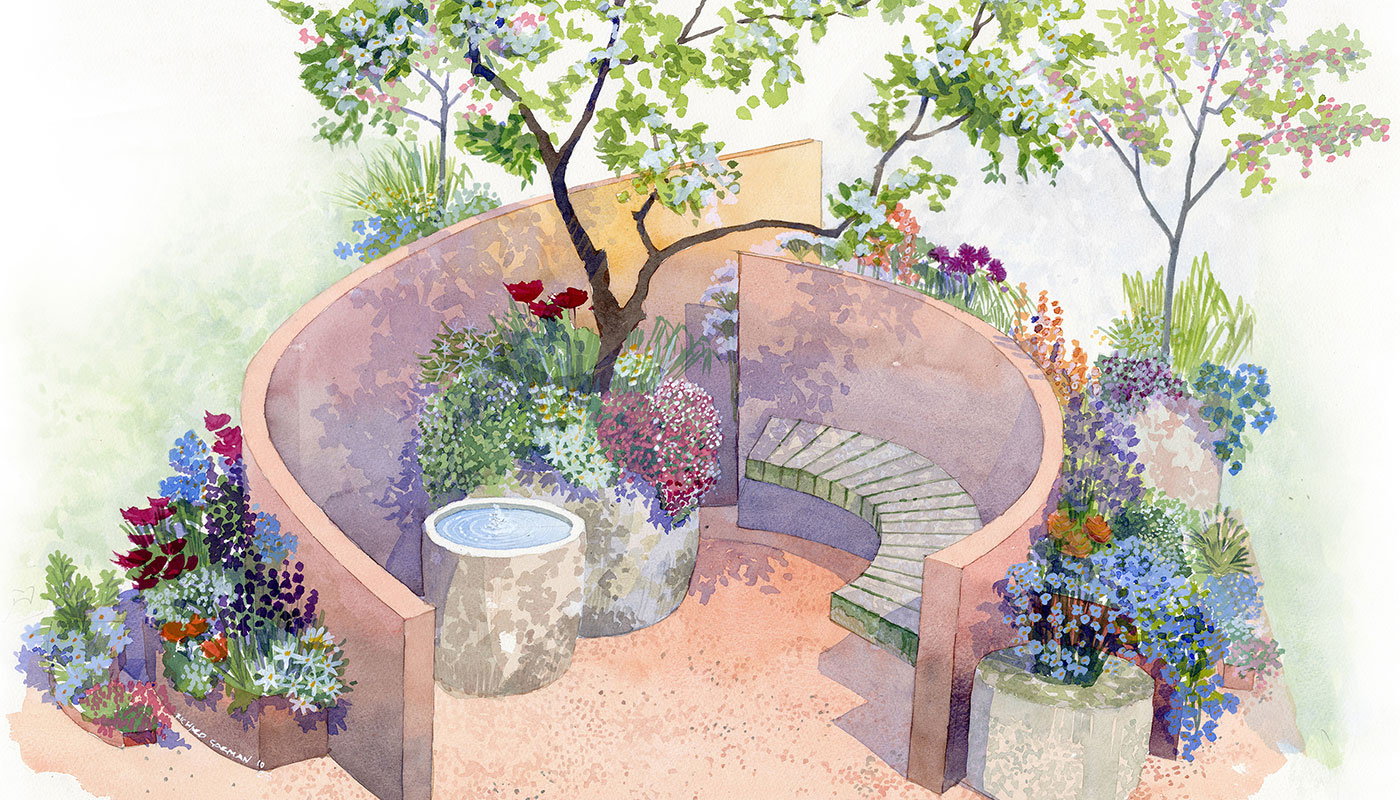
At the heart of the garden sits a beautiful apple tree representing the ‘Mother’ the living culture of bacteria formed during fermentation and the beneficial heart of the tonic.
Inspired by the protective amber glass bottles recommended to store your ACV, large sweeping curved, high gloss steel sculptures protect the ‘Mother’. Ombred from dark to light, the colours echo the play of light through the varying densities of the glass. These protective forms extend to enclose an intimate seating area, allowing visitors to sit within the same cocooning protection.
A gently bubbling water feature, within the centre of the garden, represents the active fermentation of the apple cider vinegar and creates a soothing sound, further aiding wellness.
Curved raised beds ripple outward from the centre, suggesting the wider effects of a healthy microbiome, influence extending far beyond the point of origin.
Traditional weathered cider making millstones inspired the large, round stone tree planters. Crafted using Hypertufa, a system of mixing aggregates to create a stone-like material.
Planting, inspired by rural hedgerows and meadows, supports both biodiversity and tree health. Species such as Chamaemelum nobile and Mentha x piperita act as pollinator magnets and natural pest deterrents, while also offering medicinal qualities.
Further details pepper the garden from the colour of the gravel underfoot (inspired by the red brick of Herefordshire & Worcestershire) to the small holes in the back wall and planters (perfect for solitary nesting bees, the apple tree’s number 1 pollinator).
Beyond the ACV narrative, the garden carries a deeper purpose. Every three minutes someone in the UK develops dementia, now the country’s leading cause of death.
Alzheimer’s Society’s pioneering research programme works in collaboration with world-leading scientists and people affected by dementia, ensuring the research they fund is the highest quality and addresses the highest priority issues. One emerging area for this research is the relationship between the gut microbiome and brain health. With 14 modifiable risk factors already identified, more research is needed to understand this gut-brain interaction.
At its heart, this garden is about invisible systems, in soil, in fermentation, and within ourselves. It is an invitation to look a little closer at the quiet complexity that sustains both landscape and life.
Alzheimer’s Society: Microbes & Minds garden will be on showcased at RHS Chelsea Flower Show 2026
