
Tina Worboys | Jan 2026
Reflecting on the conference, one concept that stayed with me was the idea of viewing our gardens a kaleidoscope, a constantly moving mosaic of habitats rather than a fixed landscape. Charlie Harpur called it an ‘ever changing dynamic landscape’ which we gently twist and turn to increase its biodiversity. So often we talk about our gardens being ‘done’ but this is never really the case. Moving from seeing our spaces as static pictures to complex, evolving habitats fundamentally changes how we think about our outside spaces and what they really need to thrive.
Asked how to increase the biodiversity of a wildflower meadow, John Little showed an image of a ‘bad shed’. An allotment creation of bits of discarded timber and corrugated metal held together mainly with love and hope. Not beautiful, but the mixture of materials, microclimates, light levels, shelter and temperature make homes for countless insects and small mammals, adding a crucial new dimension to that simple field.
This is why our gardens are so often bustling ecosystems and far more diverse and successful than the neighbouring open countryside. From the mix of flora and fauna to the structures and materials used, our gardens offer life to so many. Coupled with our conscious observations and interventions, we are creating thriving communities right under our noses.
Communities, connection and complexity were themes raised again and again during the two days, from insect habitats to our own neighbourhoods and mental health. It appears the three C’s are crucial in creating healthy environments and a healthy us. Where there is simplicity and singularity, we all struggle.
So, keep gardening, wilding doesn’t mean letting go and giving up to see what happens (although that would be fun too). But by slowing down, understanding that the living garden is forever in a state of flux and allowing its gentle ebb and flow (including death) we can become better gardeners and ecologists at the same time. It may even change our view on what a beautiful garden really is.
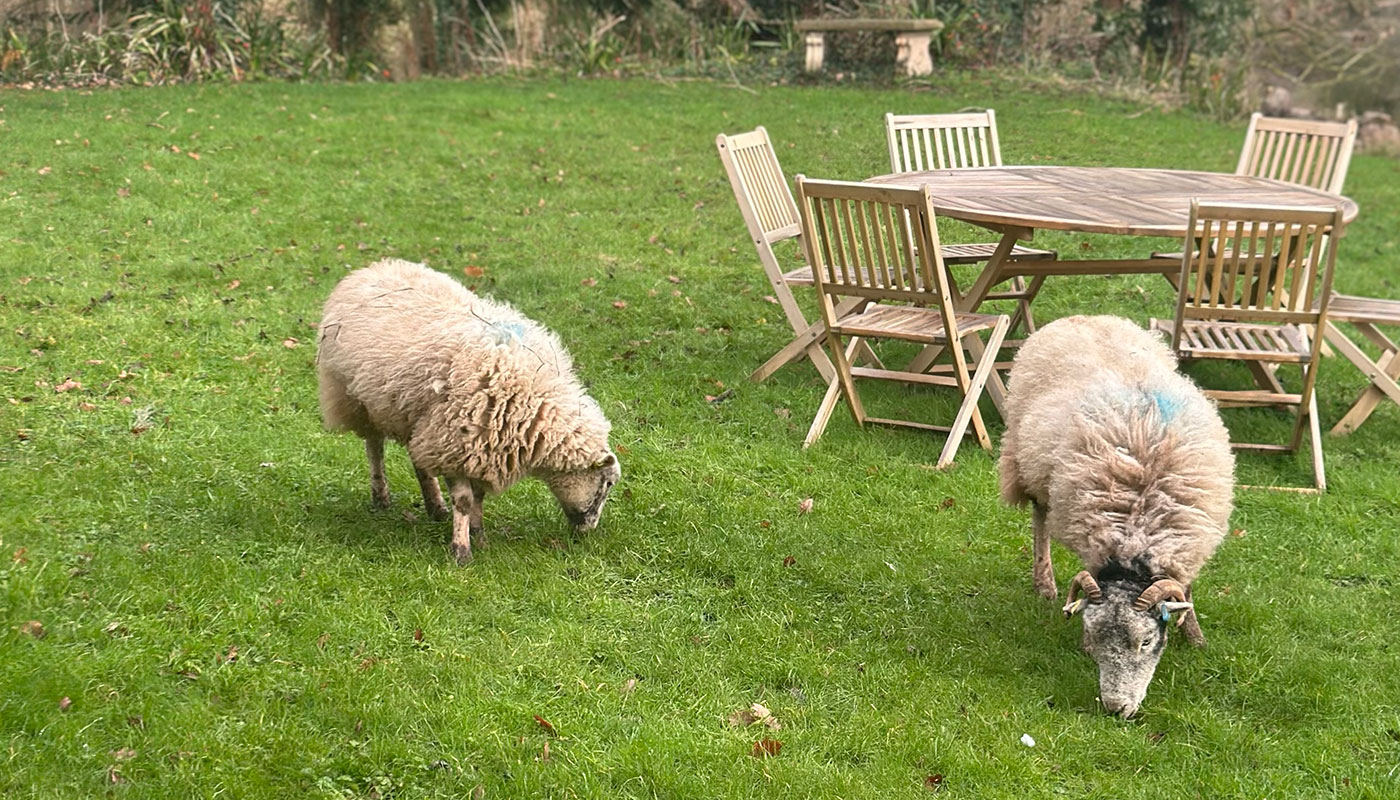
And regarding our occasional woolly visitors, we do eventually herd them back to their flock, although maybe not quite as quickly as before.
Are you interested in adding a little more wild to your garden but unsure where to start or afraid it’ll look messy or uncared for? Why not get in touch today and make 2026 the year you embrace your wild side.
